Identity and Access
Management Solutions for
Enterprises

USUA designs and operates identity access management solutions that give every employee, customer, partner, and machine identity a single trusted record and a consistent rule for what it may reach. We unify fragmented directories into one source of identity truth, standardize authentication, automate the joiner-mover-leaver lifecycle, and wire in identity access management governance so access tracks current business need.

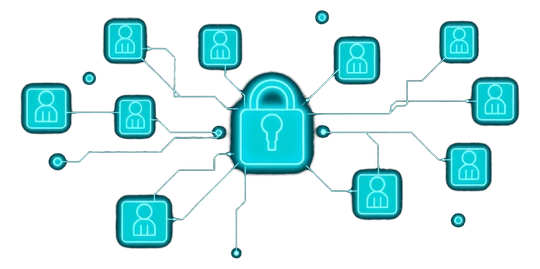
Identity Access Management Illustration
THE PROBLEM

Why Identity Has Become the Control Surface Every Enterprise Struggles to Hold

Most organizations did not set out to build a sprawling identity estate; it accumulated. A directory for employees, a separate store for customers, a handful of cloud-native identity systems, dozens of SaaS applications, orphaned service accounts, and a growing population of non-human workloads that authenticate without a person ever logging in.
49%
of organizations name identity and access management among the top five security skills they need.
Source: ISACA
46%
of organizations experienced a cyberattack in the past year, with a significant portion involving identity systems.
Source: JumpCloud
32%
of breaches involve the use of stolen credentials, making identity the primary control surface.
Source: Verizon DBIR
DEFINITION

What Are Identity and Access Management Solutions?

Identity and access management solutions are the combined programs, policies, and technology an organization uses to establish a trusted digital identity for every person, device, and workload, and then to decide and enforce what each identity is permitted to do across applications, cloud platforms, and data.
Where a single login screen only asks “are you who you claim to be,” a mature IAM program also answers “should this identity still exist, what is it currently allowed to reach, and can we prove that decision was correct.”
  • Authentication – proving an identity is genuine at the moment of access using strong verification methods.
  • Authorization and access control – deciding exactly what an authenticated identity may access and what actions it may perform.
  • Identity administration – managing the full joiner, mover, and leaver lifecycle so access is provisioned, adjusted, and removed automatically.
  • Identity governance – continuously validating that access remains appropriate, compliant, and auditable.
SECURITY

How Fragmented Identity Turns One Stolen Credential into an Estate-Wide Incident

Read enough post-incident reports and the same shape recurs: the breach began not with a sophisticated exploit but with a valid identity no governance layer was watching closely. The login was easy; the damage came from how far that identity could quietly reach.
  • An attacker captures a working credential through phishing, malware, password reuse, or another compromise.
  • The identity belongs to someone whose role has shifted across teams and acquisitions, accumulating permissions nobody fully reviews.
  • Those permissions now span multiple systems including finance applications, HR platforms, cloud environments, and privileged groups.
  • Without continuous governance to flag anomalies, the attacker moves laterally under a trusted identity, escalating through over-provisioned access.
  • Authentication, authorization, and auditing remain in separate silos, making investigation slow and difficult.
Get an Identity Risk Assessment
Identity Security Diagram
OUR PROCESS

How USUA Delivers Identity Access Management Governance

USUA runs identity and access management engagements through a documented four-stage delivery process proven across regulated industries and complex enterprise environments. Each stage ends in a fixed-scope deliverable and plugs directly into the customer's existing directories, identity providers, and security operations tooling.
Identity Assessment Icon
1. Identity Assessment and Discovery
Assessment begins by inventorying every directory, identity provider, application, cloud platform, and orphaned service account in scope, then reconciling them into one picture of who and what can authenticate. The output is a current-state identity map that names duplicate accounts, unmanaged silos, inherited entitlements, and the gap between effective access and documented business need.
Architecture Design Icon
2. Target Architecture Design
Design work maps the discovered estate onto a target identity architecture. The future-state source of identity truth, authentication standards, role model, and attribute model are defined while governance cadence and security requirements are aligned with the customer’s operational and compliance objectives.
3. Phased Rollout and Integration
Rollout proceeds through deliberate waves rather than a single risky cutover. Identity sources are consolidated first, authentication is standardized next, applications are federated, and lifecycle automation is switched on once provisioning is proven. Every wave ships with a documented rollback path.
Governance Icon
4. Governance and Continuous Review
Governance continues after deployment through access certifications, segregation-of-duties enforcement, automated deprovisioning on role changes and departures, anomaly telemetry, and regular audit reporting. Reports are emitted on a documented cadence so the identity posture remains current between formal reviews.
OUTCOMES

What You Get with USUA Identity and Access Management Solutions

USUA's identity and access management solutions are built to deliver measurable identity-layer outcomes within a single quarter. Every engagement produces concrete deliverables the customer can validate against their own metrics.
Identity Truth Icon
A Single Source of Identity Truth
Fragmented directories and duplicate accounts are consolidated into one authoritative identity record per employee, contractor, partner, and workload.
Authentication Icon
A Standardized, Phishing-Resistant Authentication Layer
Consistent authentication standards are established using strong verification methods, reducing exposure to credential theft and account compromise.
Least Privilege Icon
A Least-Privilege Access Model
Broad standing access is reduced to role-based, attribute-driven permissions that limit risk while preserving operational efficiency.
Lifecycle Icon
An Automated Joiner-Mover-Leaver Lifecycle
Provisioning, modification, and removal of access become automated events tied directly to workforce and system-of-record changes.
Governance Icon
Continuous Identity Access Governance
Access certifications, entitlement reviews, governance workflows, and audit reporting remain active long after deployment is complete.
Coverage Icon
Coverage Across Cloud, Legacy, and Data
Governance extends across cloud platforms, on-premises applications, SaaS tools, privileged accounts, and sensitive data.
WORKFORCE

Workforce IAM: One Governed Identity for Every Employee and Contractor

Workforce IAM is the discipline most people picture when they hear identity and access management: getting employees, contractors, and internal service accounts into the right systems on day one, keeping their access correct as roles change, and removing it cleanly when they leave.
It is also where the largest volume of identity decisions happens every day, which is why small inefficiencies and small gaps can quickly compound across a large organization.
USUA's workforce engagements concentrate on four points where most programs leak:
  • Lifecycle automation — joiner, mover, and leaver events flow from HR systems into provisioning and deprovisioning automatically.
  • Role and attribute modeling — access is expressed through a maintained role model and attribute-based rules tied to verified identities.
  • Authentication standardization — a single authentication standard covers every internal application and workforce system.
  • Governance and certification — managers and system owners review access on a defined cadence while segregation-of-duties controls reduce risk.

Workforce IAM Illustration
Customer IAM Illustration
CUSTOMER & EXTERNAL

Customer IAM and External Identity for Partners, Vendors, and Consumers

Not every identity an organization manages is on its payroll. Customers create accounts, partners need scoped access to shared systems, vendors connect from outside the network, and machine identities authenticate with no person behind them. Customer IAM and external identity govern this audience, which carries a different risk profile than the workforce.
USUA extends the same identity architecture to external identities across multiple use cases. Consumer identity programs support registration, authentication, consent management, and account recovery while maintaining a seamless user experience.
For B2B federation, external organizations authenticate against their own identity providers and receive precisely-scoped access to shared resources. Entitlements are governed and certified just as rigorously as internal workforce access.
Third-party and vendor access is managed through controlled onboarding, explicit expiration dates, and continuous review. This prevents external accounts from quietly accumulating permissions and becoming long-term security risks.
CLOUD & HYBRID

Cloud and Hybrid IAM Across AWS, Azure, and Google Cloud

Cloud and hybrid IAM must reconcile the way each platform expresses identity and permission with the identities an organization already manages on the ground. AWS, Azure, and Google Cloud each implement identity differently, while most enterprises still operate on-premises directories and legacy systems.
USUA's cloud and hybrid engagements project one identity program across every environment. Federated identities flow from authoritative sources into cloud-native services, while effective access remains continuously governed and validated.
  • Human access to consoles, applications, and data within a single cloud account or project.
  • Access that spans accounts, subscriptions, tenants, and projects across one provider.
  • Hybrid access where on-premises identities reach cloud resources and cloud identities reach on-premises systems.
  • Non-human and workload identities including service accounts, APIs, automation platforms, and machine-to-machine authentication.
Cloud and Hybrid IAM Illustration
MARKET LANDSCAPE

Identity Access Management Solutions: The 2026 Landscape

The market for identity access management solutions has stratified into several overlapping layers, each with its own vendors and operating assumptions. Identity providers and directories anchor authentication and single sign-on, identity governance suites focus on access certification and lifecycle management, privileged access platforms secure high-risk accounts, and customer identity platforms manage consumer-scale registration and login experiences.
Most enterprises end up running pieces of several layers simultaneously, which is precisely how the fragmentation challenge emerges. Each platform often solves a specific problem exceptionally well, but organizations are still left responsible for connecting those systems into a governed identity program.
Recognized vendors across these layers include identity providers, governance platforms, privileged access management suites, and cloud-native IAM services. Industry analyst firms and security frameworks provide useful reference points for evaluation, but category leadership alone does not determine whether a platform fits a specific organization's operating model.
USUA takes a vendor-neutral approach by designing the right combination of identity provider, governance, privileged access, and cloud entitlement tooling for each customer's environment. The objective is not to maximize the number of products deployed but to build a coherent identity architecture that reduces risk, simplifies operations, and lowers long-term ownership costs.
COMPARISON

IAM vs IGA, PAM, CIEM, and SSO: How the Identity Disciplines Fit Together

The identity field has accumulated a thick set of acronyms over the last decade. IAM, IGA, PAM, CIEM, and SSO are not competing programs — they are disciplines that answer different identity questions. Understanding how they fit together is essential for building a complete governance strategy.
Discipline Primary Scope Question Answered
IAM
Identity & Access Management
Authentication, authorization, identity lifecycle management, and access control. Who is this identity and what should it be allowed to access?
IGA
Identity Governance & Administration
Access reviews, certifications, entitlement governance, and policy enforcement. Does this access still belong, and can we prove it?
PAM
Privileged Access Management
Protection, monitoring, and control of elevated accounts and privileged credentials. How are high-risk identities controlled and monitored?
CIEM
Cloud Infrastructure Entitlement Management
Discovery and governance of cloud permissions across multi-cloud environments. What can identities actually do in the cloud versus what they should do?
SSO
Single Sign-On
Federated authentication across multiple applications through one login experience. How can users securely access many systems with one login?
Get an Identity Risk Assessment
ZERO TRUST

Identity as the Foundation of a Practical Zero Trust Program

Zero Trust architecture begins with a simple premise: no identity, device, application, or workload should be trusted simply because it exists inside a network boundary. Every access request must be evaluated continuously using current context, verified identity attributes, and policy-driven controls before access is granted.
Identity and access management provides the operational foundation that makes Zero Trust achievable. Authentication establishes confidence in who or what is requesting access, authorization determines what actions are permitted, and governance continuously validates that those permissions remain appropriate over time.
A mature Zero Trust strategy extends beyond user accounts. It includes service accounts, APIs, cloud workloads, privileged identities, third-party access, and machine credentials. Every identity becomes part of the same governed framework, reducing the number of unmanaged pathways that attackers can exploit.
When identity serves as the authoritative control layer, security decisions become dynamic rather than static. Access can be adjusted, elevated, restricted, or revoked in real time based on risk signals, business context, and verified policy requirements, creating a practical Zero Trust model that scales across the entire enterprise.
FAQ

Frequently Asked Questions About Identity and Access Management

What are identity access management solutions?
Identity access management solutions are the combined programs, policies, and technology an organization uses to establish a trusted digital identity for every person, device, and workload, and then to decide what each identity is permitted to do across applications, cloud platforms, and data. A complete IAM program covers four working parts - authentication that proves who is asking, authorization that decides what they may reach, identity administration that manages the full joiner-mover-leaver lifecycle, and identity access management governance that continuously certifies whether the resulting access is still warranted - so access stays tied to current business need rather than to history.
What is the difference between IAM and IGA?
Identity and access management is the broad operational layer that authenticates identities and grants them access in real time. Identity governance and administration is the control layer above it that decides what access should exist, automates the joiner-mover-leaver lifecycle, and runs the access certifications and segregation-of-duties checks that keep entitlements defensible. IAM enforces access; IGA governs whether that access is correct. USUA delivers both as connected layers of one identity program rather than as disconnected tools.
What is the difference between IAM and PAM?
IAM governs the everyday access of the entire identity population - employees, customers, partners, and workloads. Privileged access management is a specialized discipline within that wider program focused on the small set of high-impact administrative and elevated accounts whose misuse causes the most damage, adding credential isolation, session brokering, and just-in-time elevation. PAM is the hardened inner ring of an IAM program, not a replacement for it.
How long does a USUA identity and access management engagement take?
A typical IAM engagement reaches an assessed current-state and a target architecture inside four to six weeks. Foundational identity unification and authentication standardization follow over the next two to three months, with governance, lifecycle automation, and access reviews layered in across the subsequent quarter. Most enterprises see a consolidated identity source and standardized authentication live within ninety days, with full governance maturing over the following two to three quarters.
Does IAM cover workforce, customer, and cloud identities?
Yes. USUA treats workforce IAM, customer and external IAM, and cloud and hybrid IAM as three audiences served by one coherent identity architecture. Employees, contractors, customers, partners, and machine identities are each governed under policies suited to their risk profile, but they share a common source of identity truth, a consistent authentication standard, and unified monitoring rather than living in separate, disconnected silos.
Which identity platforms does USUA work with?
USUA is vendor-neutral and works across the major identity providers and directories - Microsoft Entra ID, Okta, Ping Identity, ForgeRock, and on-premises Active Directory - alongside the native IAM of AWS, Microsoft Azure, and Google Cloud, and dedicated IGA, PAM, and CIEM tooling already in production, designing the right combination for each customer rather than reselling a single product.

Ready to Turn a Tangle of Directories Into One Governed Identity Program?

USUA helps organizations of every size design and operate identity access management solutions that align with existing directories, identity providers, cloud platforms, and regulatory environments. Schedule a consultation to discuss your current identity posture, governance requirements, and roadmap for improvement.
Book a Consultation