Passwordless Authentication
Solutions for Enterprises

Why a Password Plus a One-Time Code No Longer Stops the Attacker
- The user receives a phishing email and clicks a convincing login page that closely resembles the legitimate service.
- The fake page forwards credentials directly to the real application while displaying the real service's responses back to the victim.
- The user enters the one-time code from their authenticator app, SMS message, or push approval.
- The phishing proxy instantly relays that second factor to the legitimate service before it expires.
- The service issues a valid authenticated session which is captured and reused by the attacker.
- Because legitimate credentials were used throughout the process, the login often appears normal until the compromised account is abused.
How USUA Delivers Passwordless Security Architecture Consulting

1. Discovery and Authentication Inventory
Discovery identifies every authentication point across workforce, cloud, SaaS, VPN, administrative, and legacy environments. Existing password usage, device populations, recovery workflows, and application dependencies are documented to create a migration roadmap and prioritize the systems that will deliver the greatest security benefit.

2. Authenticator Architecture and Policy Design
USUA designs the authentication architecture, selecting the right combination of passkeys, platform authenticators, roaming FIDO2 keys, recovery controls, and enrollment workflows. The deliverable is a documented policy aligned to the organization's security, compliance, and user experience requirements.

3. Phased Passwordless Migration
Migration occurs in controlled phases beginning with pilot populations and progressing toward broader workforce adoption. Enrollment campaigns, credential provisioning, and user readiness activities are executed while maintaining operational continuity and documented rollback paths where required.

4. Operations and Ongoing Assurance
Passwordless authentication becomes part of the organization's long-term identity program through lifecycle management, enrollment governance, operational monitoring, recovery validation, and periodic reviews that ensure phishing-resistant authentication remains effective as the environment evolves.
What You Get with USUA Passwordless Authentication Solutions

Phishing-Resistant Passwordless Access
FIDO2 credentials are cryptographically bound to legitimate services, preventing credentials from being replayed through phishing pages, reverse proxies, and adversary-in-the-middle attacks.

FIDO2 and WebAuthn Authentication Deployment
Standards-based passwordless authentication is deployed across workforce and customer-facing applications using open protocols rather than proprietary platform lock-in.

Device-Based Passwordless Access
Users authenticate with platform passkeys, managed-device credentials, synced passkeys, and security keys appropriate to the risk profile of their role.

Biometric Passwordless Login
Fingerprint and facial verification unlock credentials locally, ensuring that biometric information never leaves the device while maintaining a frictionless user experience.

Governed Recovery and Credential Lifecycle
Enrollment, credential replacement, recovery, revocation, and lifecycle management are built into the identity program so users never need to return to passwords.

Integration with the Existing Identity Stack
Passwordless authentication integrates with identity governance, access management, MFA, endpoint management, and SIEM platforms already deployed in the environment.
FIDO2 and WebAuthn Authentication Deployment Done Right
- Relying-party and origin configuration — domain scope, subdomains, federation paths, and application boundaries are configured so authentication behaves consistently across the estate.
- Authenticator attestation and policy — enrollment policies determine which authenticators are trusted, where hardware-backed assurance is required, and how sensitive access is protected.
- User verification and resident keys — deployment decisions establish where biometrics, PIN verification, discoverable credentials, and synced passkeys should be used.
- Cross-browser and cross-platform behavior — authentication workflows are validated across browsers, operating systems, managed devices, and workforce user populations.

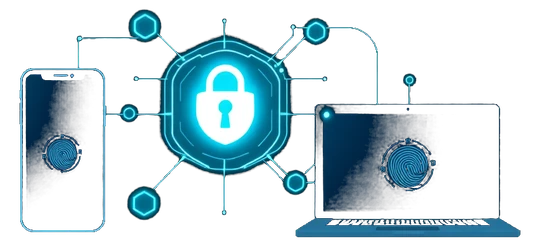
Device-Based Passwordless Access for Workforce: Passkeys and Security Keys
Passwordless Authentication for Zero Trust Environments
- Workforce access to internal applications protected by Zero Trust gateways, where passwordless credentials become the primary identity proof for every session.
- Cloud and SaaS application access federated through the identity provider, ensuring the phishing-resistant assertion flows through downstream services.
- Step-up authentication for sensitive actions, where fresh passwordless verification raises assurance at the exact moment elevated access is requested.
- Continuous-access evaluation scenarios where device posture, network signals, and identity assurance are evaluated together throughout an active session.