Access Management / Offboarding

Secure Offboarding
Without the Gaps

When an employee, contractor, vendor, or partner leaves your organization, every account, permission, and access point must be handled correctly. Our team helps organizations manage the offboarding process from start to finish, ensuring access is removed consistently across systems, applications, and environments.

We work alongside your organization to reduce risk, maintain operational continuity, and help ensure that former users no longer retain unnecessary access.

Covers employees, contractors, vendors, and third-party users
Access removed across cloud platforms, apps, and admin systems
Structured, repeatable process built around your organization
Secure Offboarding
Access Removal

Removing Access Across Your Environment

Offboarding often involves more than disabling a single account. Our team helps coordinate access removal across your organization's full technology ecosystem through a structured, consistent process.

Coordinated Access Removal

Users may have access to cloud platforms, internal applications, collaboration tools, shared resources, development environments, and administrative systems. By establishing consistent offboarding procedures, organizations can avoid overlooked accounts and reduce administrative burden.

Cloud Platforms
SaaS applications, cloud storage, hosted environments
Internal Applications
Business systems, internal portals, line-of-business tools
Collaboration Tools
Messaging, file sharing, project management platforms
Development Environments
Repositories, CI/CD pipelines, developer tooling
Administrative Systems
Identity providers, directory services, privileged accounts
Privileged Access

Managing Elevated Permissions During Offboarding

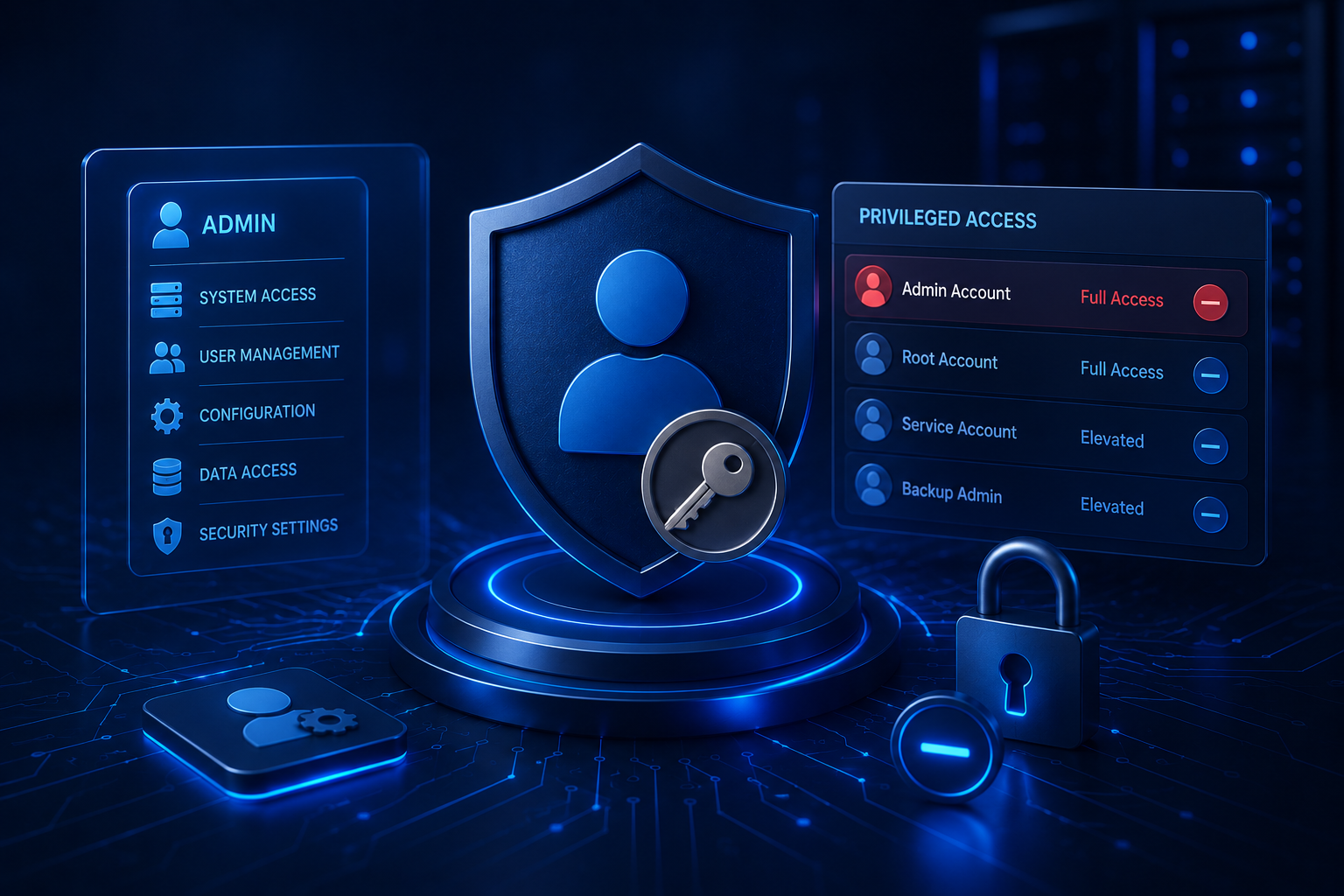
Users with administrative or elevated privileges require additional attention during the offboarding process. These accounts may have access to critical systems, sensitive resources, or high-impact functions that extend well beyond standard user permissions.

01

Identify Privileged Access

We work with your team to identify all accounts and access points held by a departing user that carry elevated or administrative rights — including accounts that may not be immediately visible in standard user directories.

Admin accounts Service accounts Root access
02

Review Administrative Rights

Each elevated permission is reviewed in the context of the systems it touches and the risk it represents. Our team helps assess what access exists, what remains necessary for operations, and what should be addressed as part of the offboarding.

Critical systems Sensitive resources High-impact functions
03

Transition or Remove Permissions

Where elevated access cannot simply be removed — because it supports an active system or process — we assist with planning the transition of those responsibilities. Where removal is appropriate, we help ensure it is handled completely and without disruption.
Responsibility transfer Access removal Continuity planning
Privileged Access Review

"Critical access does not remain active after departure — that is the standard we help organizations work toward."

USUA Access Management

Shared Access

Addressing Shared and Team-Based Access

During offboarding, shared access points are among the most easily overlooked. We help organizations identify and evaluate shared access relationships so that ownership, permissions, and account responsibilities are properly reviewed when individuals leave.

Shared Resources

Shared drives, mailboxes, storage locations, and collaborative workspaces may carry access tied to a departing individual. We help ensure these resources are reviewed and ownership is reassigned or restricted appropriately.

Service Accounts

Service accounts are frequently created for specific individuals and may retain elevated permissions long after those individuals depart. We assist with identifying these accounts and evaluating what action is appropriate.

Distribution Groups

Distribution lists and security groups often include departing users whose membership has not been reviewed. We help organizations include group membership in the offboarding scope so these relationships are properly updated.

Collaborative Environments

Project spaces, team channels, and collaborative platforms may grant access to files, conversations, and resources that extend beyond an individual's primary role. These environments require their own review during offboarding.

Shared access doesn't disappear on its own. Without an explicit review, departing users can remain connected to team resources, distribution groups, and service accounts indefinitely — often without anyone noticing.

Talk to our team
Transition Support

Supporting Operational Continuity

Effective offboarding is not only about removing access — it is also about ensuring a smooth transition. Team members often hold responsibilities, access knowledge, and operational ownership that must be transferred before departure.

What the departing user holds How the organization moves forward

Access Ownership

System credentials, admin accounts, and shared resource ownership tied to the individual

Reassigned or revoked through structured review
Ownership transfer Access review

Administrative Responsibilities

Elevated duties, approval authorities, and operational oversight held by the departing user

Mapped to appropriate individuals before departure
Responsibility mapping Role continuity

Critical Operational Functions

Business processes, workflows, and operational tasks dependent on the departing individual

Documented and transitioned to maintain continuity
Process documentation Business continuity

Our team works with your stakeholders to understand existing processes and help ensure access ownership, administrative responsibilities, and critical operational functions are reassigned appropriately — so business operations continue without disruption.

Vendor and Third-Party Offboarding
External Access

Managing External User Access

External vendors, consultants, contractors, and business partners frequently require access to organizational systems. When these relationships end, access should be reviewed and addressed with the same level of attention as internal employees.

Who this covers
Vendors
Third-party suppliers with ongoing system or data access
Consultants
Individuals engaged for specific projects or advisory work
Contractors
Contract workers with temporary but meaningful access rights
Business Partners
Partner organizations whose personnel access internal platforms
Process Development

Building Repeatable Offboarding Procedures

Organizations often face challenges when offboarding processes vary between departments or rely on manual communication. Consistency is critical for maintaining a reliable approach across every personnel transition.

Common Challenges

Inconsistent Processes

Offboarding steps vary by department, manager, or team — creating gaps each time someone leaves

Manual Communication

Reliance on ad-hoc emails and informal handoffs means steps are missed or delayed without visibility

Unclear Ownership

No single team or role owns the full offboarding scope, so tasks fall through the cracks between IT, HR, and management

What We Help Build

Structured Workflows

Step-by-step offboarding procedures that apply consistently across departments and user types

Defined Responsibilities

Clear ownership mapped to each step — who initiates, who executes, and who confirms completion

Standardized Procedures

Documented, repeatable processes that reduce uncertainty and keep every offboarding on track regardless of who is involved

Applicable across
Human Resources Information Technology Security Legal & Compliance Operations Finance
Get Started

Offboarding Support Tailored
to Your Organization

Every organization operates differently

With unique systems, workflows, and access requirements, there is no single offboarding approach that works everywhere. Our team works closely with your stakeholders to understand existing processes and help develop an approach that aligns with your operational needs and security objectives.

Whether you are refining existing procedures or building a more structured offboarding program from the ground up, we provide guidance, expertise, and hands-on support to help ensure access transitions are handled effectively and consistently.

What to expect from a consultation
We listen first

We start by understanding how your organization currently handles offboarding and where the friction points are

We review your requirements

Access scope, user types, systems involved, and governance expectations are all factored into our approach

We outline a tailored path forward

You leave with a clear sense of what a structured offboarding program could look like for your organization

Ready to strengthen your offboarding process?

Schedule a consultation with our team to discuss your organization's requirements and explore a tailored approach to secure offboarding.

Schedule a Consultation
No commitment required — just a conversation